
Facial Devices Changing Skincare in 2026

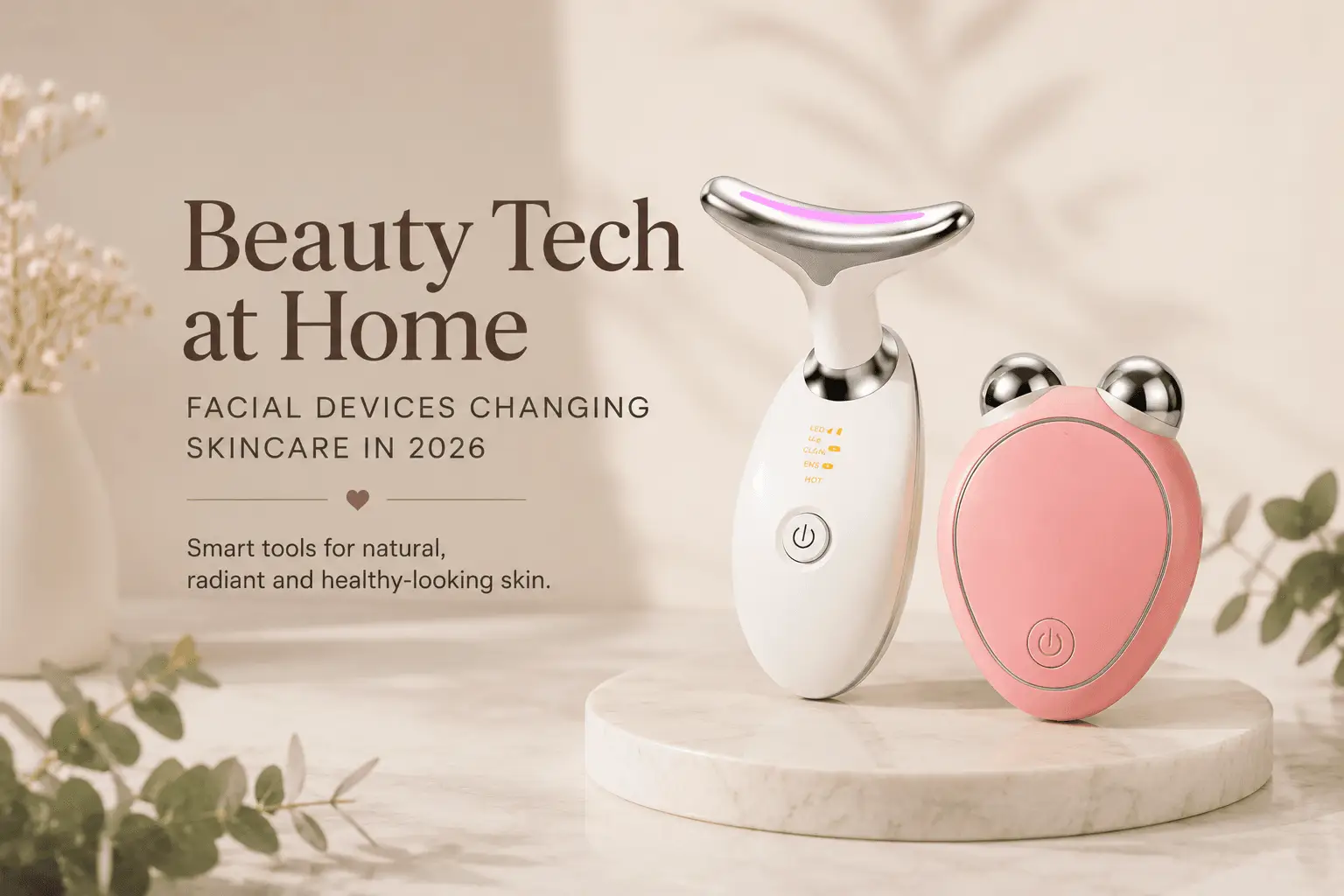
Beauty Tech at Home: The Facial Devices Changing Skincare in 2026
Skincare in 2026 is no longer just about cleansers, serums, and moisturizers. At-home beauty devices are becoming a regular part of modern routines, helping people support circulation, improve product absorption, and create more targeted skincare rituals without booking an in-clinic treatment.
If you’ve been wondering which facial tools are actually worth adding to your routine, this guide breaks down the biggest beauty tech shifts happening at home right now—and how to use them in a way that feels realistic, effective, and skin-friendly.
Introduction
The rise of beauty tech at home reflects a bigger change in the way people approach skincare. Instead of relying only on complicated multi-step routines, many consumers are now looking for tools that make skincare more personalized, more consistent, and easier to maintain. In 2026, facial devices are no longer treated like “extras.” They are becoming a practical extension of daily skincare, especially for people who want a more intentional routine without frequent spa visits.
From LED tools and microcurrent-inspired devices to facial massage technology designed to support circulation and relaxation, the modern skincare routine is becoming smarter and more flexible. The best devices don’t replace skincare fundamentals like cleansing, hydration, and sunscreen—but they can make a routine feel more effective, more enjoyable, and better tailored to real life.
Why Beauty Tech at Home Is Growing So Fast in 2026
There’s a reason beauty tech at home is getting so much attention in 2026: it fits the way people actually want to care for their skin. Instead of depending only on expensive in-office treatments or overwhelming ten-step routines, more people are building skincare habits around convenience, consistency, and flexibility. A facial device can sit on your bathroom counter, be used in a few minutes, and become part of a routine you can realistically stick to. That practicality is a big part of why at-home devices have moved from “nice to have” gadgets to regular skincare companions.
Another reason for this growth is that consumers are becoming more selective. People don’t just want more products—they want tools that help them use their products better and support specific goals like reducing puffiness, improving the look of dull skin, or creating a more sculpted, refreshed appearance. At-home beauty devices speak to that demand because they feel more targeted than simply layering on another serum. They also match the wider shift toward “skinimalism,” where the goal is not doing more, but doing the right things more consistently.
Beauty brands and trend forecasters are also leaning into devices because they sit at the intersection of skincare, wellness, and self-care. In 2026, the conversation isn’t only about dramatic transformations; it’s about maintaining healthy-looking skin in a way that feels sustainable. A short facial massage session, a red-light tool, or a device that supports product absorption can fit naturally into that mindset. When used well, beauty tech at home becomes less about chasing a miracle and more about making skincare routines easier, calmer, and more intentional.
The Most Popular Facial Devices in 2026 and What They Actually Do
Not all skincare tools do the same thing, and one of the biggest mistakes people make is buying a device without knowing what role it plays in a routine. In 2026, the most talked-about categories tend to fall into a few groups: LED tools, microcurrent-inspired devices, cleansing and pore-focused tools, and facial massage devices. Each serves a different purpose, and understanding those differences can help you choose something that actually fits your skin goals.
LED devices are popular because they’re often associated with calming-looking routines and targeted support for concerns like dullness, blemish-prone skin, or uneven-looking tone. Microcurrent-inspired tools are usually marketed around the appearance of contour, firmness, and a more lifted look. Cleansing or suction-based devices are more focused on surface buildup and helping skin feel deeply cleansed. Facial massage tools and revitalizing devices tend to support circulation, relaxation, and a more refreshed look—especially when puffiness or morning swelling is part of your concern.
For many people, the most approachable category is the facial massage device because it blends well with a standard skincare routine. You don’t need a complicated setup to use one, and it can be paired with a serum or moisturizer as part of a calming ritual. A tool like a Face Revitalizing Massager or Roller Face Massager can be especially appealing if your goal is to encourage a fresher appearance, support gentle facial massage, and make your routine feel more intentional without adding too much complexity.
The key is to stop thinking of devices as interchangeable. The best tool is the one that solves a real need in your routine—whether that’s puffiness, dullness, facial tension, or simply wanting a more enjoyable way to care for your skin.
How Facial Devices Fit Into a Smarter Skincare Routine
A facial device works best when it supports your routine rather than taking it over. That’s an important mindset in 2026, because one of the biggest skincare shifts right now is away from “more steps, more products, more everything” and toward routines that are simpler, more strategic, and easier to maintain. The smartest skincare routine is not the most complicated one—it’s the one you can repeat consistently without stressing your skin or your schedule.
A good way to think about devices is to assign them a clear role. Cleansing comes first, because tools work better on skin that’s free from makeup, sunscreen, and daily buildup. After that, a facial massage or revitalizing device can be used to complement your serum or moisturizer step, especially if you want to turn application into a more deliberate ritual. If you’re using a tool that supports massage and circulation, it makes sense to pair it with products that add slip and comfort to the skin rather than using it on a dry surface.
This is where a product like a Face Revitalizing Massager can fit naturally into a realistic routine. You might cleanse your face in the evening, apply a hydrating serum, and then spend a few minutes using the device along the jawline, cheeks, and neck. That small step can make skincare feel more therapeutic while encouraging consistency. It’s also a more accessible approach for people who don’t want to commit to a device that feels highly technical or time-consuming.
The biggest mistake is trying to stack too many tools into one day. If your skincare already includes active ingredients like exfoliating acids or retinoids, your device routine should feel supportive—not overwhelming. A smart routine leaves room for your skin barrier, your schedule, and your comfort level.
What to Look for Before Buying a Facial Beauty Device
With so many tools on the market, it’s easy to get distracted by marketing language and overlook the features that actually matter. Before buying any facial beauty device, the first question to ask is simple: what do you want this tool to help you with? If your main concern is puffiness, facial tension, or a tired-looking complexion, a massage-focused device may be more useful than a device designed for an entirely different purpose. If your concern is deep cleansing, then a cleansing-focused tool makes more sense. Matching the tool to the problem is what prevents wasted money and disappointment.
The second thing to consider is how realistic the device is for your lifestyle. A tool can sound impressive, but if it takes too long, requires too many steps, or feels awkward to use, it probably won’t become part of your routine. In beauty tech, consistency matters more than intensity. A device you use for five minutes three or four times a week is usually more valuable than one you use once and then forget in a drawer.
Design also matters more than people think. Facial devices should feel comfortable in the hand, easy to clean, and intuitive to use around the contours of the face. If you’re choosing a massage-oriented tool, look for something that supports a smooth glide across the skin and feels pleasant enough that you’ll actually enjoy reaching for it. That enjoyment matters because skincare habits are easier to maintain when they feel like self-care rather than homework.
Finally, remember that a device should support healthy skin—not replace the basics. Even the most exciting beauty tech won’t outperform consistent cleansing, hydration, and sunscreen. The best tools act as amplifiers: they help your routine feel more targeted, more relaxing, and more aligned with your goals without making skincare harder than it needs to be.
Why Facial Massage Devices Are Becoming a 2026 Skincare Staple
One of the clearest trends in 2026 is the growing popularity of facial massage devices, and it’s easy to see why. They’re approachable, versatile, and easy to weave into an existing skincare routine without turning the whole process into something technical. For many people, these tools offer the sweet spot between beauty, wellness, and convenience. You don’t need a complicated protocol to start using one—you just need a few minutes, a comfortable skincare base, and a little consistency.
Facial massage devices appeal to people because they serve more than one purpose at once. They can help transform skincare application into a ritual, encourage a more refreshed look in the morning, and offer a calming pause at the end of the day. For users who deal with facial tension, puffiness, or a complexion that looks tired after long workdays, that combination is especially appealing. The device becomes less about “fixing” your face and more about supporting the skin in a gentle, repeatable way.
This is exactly why a Roller Face Massager or Face Revitalizing Massager makes sense in a modern beauty-tech routine. It aligns with the broader movement toward skincare that feels intentional but not overwhelming. Instead of chasing a dramatic, clinic-style result at home, many users simply want a tool that helps them feel more polished, more consistent, and more connected to their routine. A facial massage device can do that while fitting naturally alongside cleanser, serum, moisturizer, and SPF.
The real value of these tools is not that they replace professional care or core skincare. It’s that they make the daily routine easier to enjoy and easier to maintain. In 2026, that combination is exactly what people are looking for from beauty tech.
How to Use Beauty Tech at Home Without Overcomplicating Your Skin Routine
The biggest advantage of beauty tech at home is convenience—but that benefit disappears if your routine becomes so crowded that you stop enjoying it. The smartest way to use facial devices is to treat them as supportive tools, not as the center of your skincare identity. In other words, let the device improve your routine, not dominate it.
A simple structure works best. Start with your non-negotiables: cleanse, moisturize, and protect your skin with sunscreen during the day. Then choose one device category that aligns with your biggest concern. If your goal is to reduce the appearance of puffiness or add a relaxing massage step, use a facial massage device. If your interest is more about deep cleansing, choose a tool built for that purpose. You do not need three or four devices to have a modern skincare routine. In fact, for many people, one well-chosen tool is more useful than a shelf full of gadgets.
Timing matters too. If a device helps you slow down and enjoy your skincare, evening may be the perfect time to use it. If it helps your face look more refreshed before makeup or before starting the day, morning might be better. The best routine is the one that fits your actual life rather than the one that looks impressive on social media.
Most importantly, pay attention to how your skin responds. If your skin barrier feels stressed, tight, or reactive, simplify. Beauty tech should support your skin’s health and comfort—not push it past its limits. In 2026, the best skincare routines are not the most complicated ones. They are the routines that are thoughtful, consistent, and built around what your skin genuinely needs.
Conclusion
The future of skincare isn’t about replacing your routine with gadgets. It’s about using the right tools to make that routine smarter, easier, and more enjoyable. In 2026, the rise of at-home beauty devices reflects a broader shift toward personalized, realistic skincare—routines that support healthy-looking skin without demanding hours of effort.
Whether you’re interested in facial massage, better product application, or simply making your skincare feel more intentional, the right beauty device can add value when it fits your actual needs. Start simple, stay consistent, and choose tools that complement your routine rather than complicate it. That’s where beauty tech at home becomes genuinely useful.